Let’s play a quick game. Look around you. Count the devices connected to the internet. Your phone, obviously. Your laptop. Maybe a smart speaker blinking in the corner. A TV. A thermostat. A doorbell camera. A fridge? A lightbulb? The game gets harder—and more unsettling—the longer you play.
We are no longer just using technology; we are moving inside of it. Our homes, once our ultimate private sanctuaries, are becoming dense networks of connected sensors, cameras, and microphones. We call this the “Smart Home,” a phrase that sells a dream of seamless convenience, futuristic comfort, and efficient security. But as we eagerly wire our domestic lives, handing over the keys to our most intimate spaces, a critical question whispers from the shadows: Are we building a smarter home, or are we just buying a more comfortable, subscription-based prison?
This isn’t about Luddite fear. It’s about confronting the trade-off we barely glance at in the unboxing excitement. We’re trading slivers of our privacy, autonomy, and even security for the promise of a voice-activated light switch. Is it a fair deal? Let’s turn on the lights and look at the fine print.
The Siren Song of Convenience: What We’re Promised
The marketing is masterful. It paints a picture of a home that anticipates your needs.
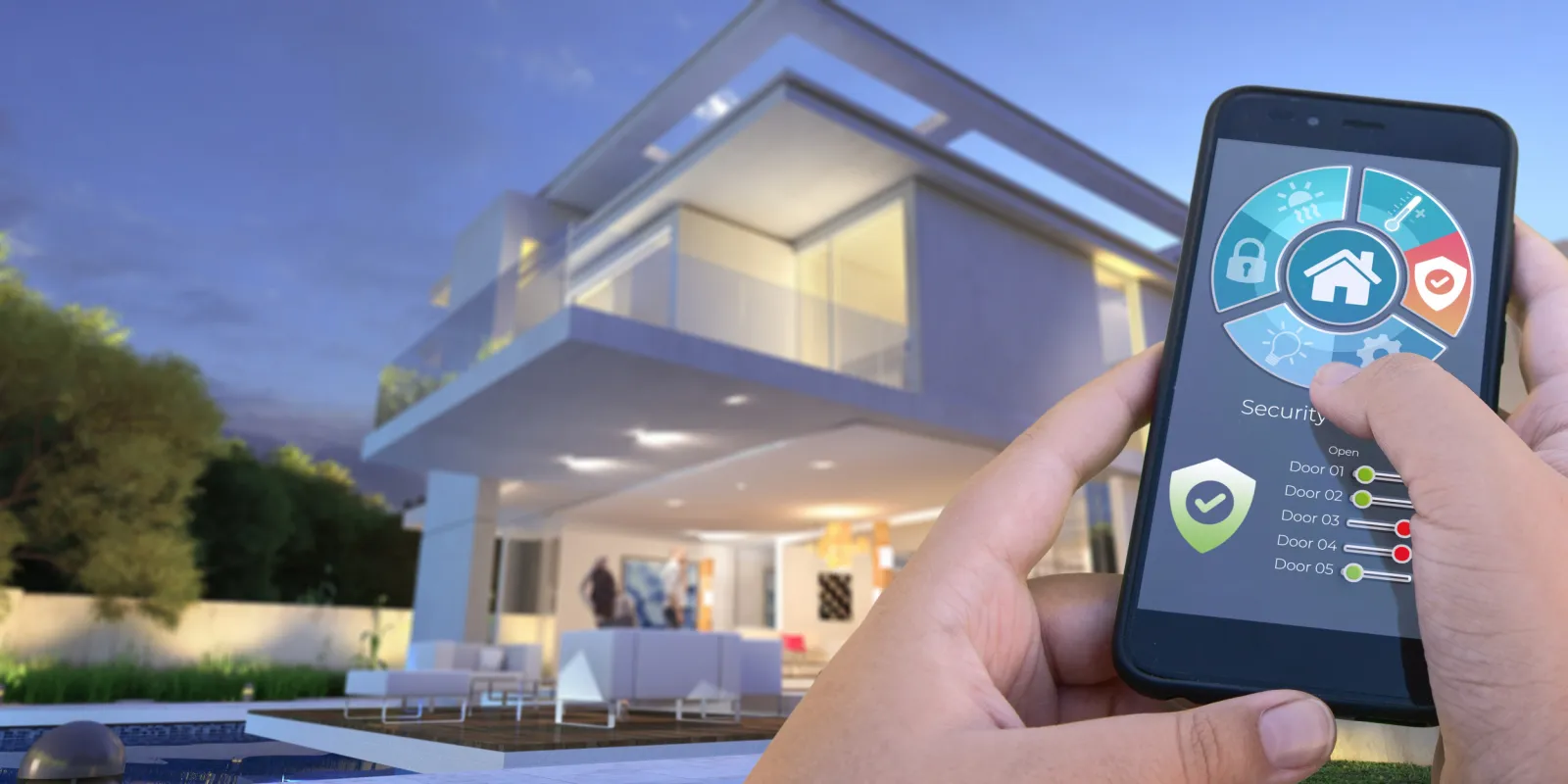
- The Symphony of Automation: “Goodnight,” you say, and the lights dim, the locks engage, the thermostat drops, and your alarm system arms itself. It feels like magic, like living in the future.
- The Guardian Angel: A camera doorbell lets you see who’s there from anywhere in the world. Sensors can alert you to water leaks before they become floods. You feel safer, more in control.
- The Efficient Butler: Your fridge suggests recipes based on its contents. Your speaker curates a playlist for your dinner party. Your vacuum cleans while you’re out. It’s labor-saving, time-reclaiming luxury.
This is the dream we’re sold: a home that works for you, that frees you. And much of this is genuinely useful! But in our rush toward this Jetsonian fantasy, we rarely stop to ask: Who else is in the house with us?
The Unseen Roommates: Data, Devices, and Corporate Overlords
When you buy a smart device, you’re not just buying a product. You’re inviting a corporate entity and its business model into your living room.
The Data Harvest
Your smart TV knows what you watch (and when, and for how long). Your speaker hears your requests (and, despite denials, may be listening for its wake word more often than you think). Your thermostat knows when you’re home and asleep. Your fridge knows your eating habits. Your robot vacuum maps the precise layout of your home.
Individually, these are data points. Aggregated, they form a shockingly intimate digital twin of your life: your routines, your preferences, your finances, your relationships, your health. This data is the true product. You are not the customer; you are the resource being mined.
The Ecosystem Lock-In: The Walled Garden Prison
This is the subtler, more insidious trap. You buy a smart bulb from Brand A. It only works smoothly with Brand A’s hub and app. So, you get the hub. Then you need a Brand A smart plug to match. Then a Brand A security camera. Before you know it, you’ve invested hundreds of dollars and countless hours into a single ecosystem.
Switching becomes a logistical and financial nightmare. You are locked in. This isn’t a home you own; it’s a platform you rent, subject to the whims of that company—its pricing changes, its privacy policy updates, its decision to discontinue support for your “old” device. Your autonomy over your own environment slowly erodes.
The Bars on the Windows: Privacy, Security, and Autonomy
A prison, at its core, is a place of surveillance, restricted freedom, and controlled access. Let’s examine how the smart home can, feature by feature, mirror these functions.
1. The Panopticon Effect: Constant, Low-Grade Surveillance
Philosopher Jeremy Bentham designed the “Panopticon”—a prison where inmates could be watched at any time but never knew when. The result was self-regulation out of fear of the unseen watcher.
Your smart home creates a digital panopticon. You may have 15 cameras and microphones scattered around your property. Even if you aren’t watching the feed, the companies are processing the data. Even if they promise not to “listen,” the potential is baked into the hardware. The psychological effect is a slow erosion of the feeling of being truly “off,” truly private in your own home. You start to live as if you might be observed.
2. The Hacking Vulnerability: Handing Over the Keys
Every connected device is a potential door into your network. That cheap, no-name smart camera from an online marketplace? It might be the backdoor a hacker uses to access your entire home network, including your laptop with banking info. We’ve seen hackers take over baby monitors to speak to children. We’ve seen ransomware attacks that lock people out of their own thermostats in freezing weather.
When you digitize your locks, you’re not just replacing a physical key; you’re replacing a physical barrier with a software one. And software has bugs. You are trading the security of a deadbolt for the security of a password—often a weak, default one.
3. The Loss of Analog Autonomy: When the Cloud Fails
What happens when the internet goes down? In a fully smart home, it’s not an inconvenience; it’s a paralysis. You may not be able to turn on lights, adjust the heat, or even unlock your own door if the mechanism is cloud-dependent. You are utterly dependent on external infrastructure for basic control of your habitat.
This is a profound loss of resilience and self-sufficiency. Your home’s core functions should not have a single point of failure that exists outside your walls. You’ve traded local control for remote convenience, and in doing so, made yourself vulnerable.
The Psychological Cell: Comfort at the Cost of Capability
The most insidious prison is one you don’t want to leave. The smart home is designed to be so convenient, so frictionless, that opting out feels like a step backward into primitive toil.
- The Atrophy of Basic Competence: Why learn to cook intuitively when your app tells you the steps? Why remember to turn off lights or adjust the thermostat when it’s automated? We outsource minor decisions and muscle memory to the system, potentially dulling our own agency and attentiveness.
- The Commodification of Rest: Even our relaxation is optimized and tracked. “Sleep scores” from our mattresses, “stress level” readings from our watches. Our private, subjective experiences are turned into quantifiable data points, often creating new anxieties about not resting “correctly.”
Building a Smarter Sanctuary, Not a Prison: A Conscious Approach
I’m not saying you should smash your smart speaker. I’m saying we need to be architects, not just consumers. Here’s how to build conscious connectivity.
1. Adopt a “Needs vs. Wants” Filter
For every device, ask: Does this solve a real problem, or just manufacture a convenience? Do you need a voice-activated faucet, or do you just want the novelty? Start with needs: security (smart locks/cameras), safety (water/leak sensors), and genuine efficiency (smart thermostats). Skip the connected juicer.
2. Prioritize Privacy and Local Control
- Choose Reputable Brands: Favor companies with transparent privacy policies and a track record of security updates.
- Seek “Local-Only” Devices: Some smart home systems (like Home Assistant with local devices) allow everything to run on your own home network without phoning home to a cloud server. This is the gold standard for privacy and reliability.
- Segment Your Network: Use your router’s guest network feature to put all your IoT (Internet of Things) devices on a separate network from your phones and computers. This contains any breach.
3. Practice Digital Hygiene
- Change Default Passwords Immediately. Always.
- Turn off features you don’t use (like voice recording on a TV if you never use it).
- Regularly update firmware. It’s a chore, but it’s your security patch.
- Cover cameras with a physical shutter when not in use. It’s a simple, powerful act of reclamation.
Conclusion: Who Holds the Keys?
The smart home isn’t inherently a prison. It becomes one through passivity, ignorance, and the unchecked pursuit of convenience over sovereignty. A prison is defined by a lack of freedom and the presence of an unseen warden.
The question for us is: Who is the warden in our digital homes? Is it a distant corporation with a stock price to boost? A hacker in a distant country? Or is it us, the conscious, informed occupants?
We must move from being mere buyers to being builders and guardians. Build a connected home that serves you, not a platform that monetizes you. Guard your privacy, your security, and your fundamental right to be left alone in your own castle.
Convenience is a great servant, but a terrible master. Make sure you still hold the keys.
FAQs About Smart Homes and Privacy
1. Isn’t this all just paranoia? If I have nothing to hide, why should I worry?
This argument conflates privacy with secrecy. Privacy isn’t about hiding wrongdoings; it’s about personal autonomy and boundaries. You have nothing to hide in your bathroom, but you still close the door. It’s about controlling your personal context. Data collected today can be aggregated, misconstrued, or used in ways you can’t predict tomorrow (e.g., for insurance premiums, targeted manipulation, or in a legal dispute). Privacy is a right, not a concession for the guilty.
2. What’s the single biggest security risk in a typical smart home?
Default or weak passwords on devices, especially cameras and routers. It’s the digital equivalent of leaving your front door wide open with a sign saying “Come In.” Hackers use automated bots to scan the internet for devices still using factory-set passwords like “admin” or “1234.” Changing these is the most critical first step.
3. Can smart devices really listen to my private conversations?
While companies like Amazon and Google state their devices only stream audio after the wake word (“Alexa,” “Hey Google”), there have been documented cases of false triggers and accidental recordings. The microphone is physically capable of listening, and the device must be always listening for its wake word. The potential for error or exploitation exists. The real issue is the ambiguity and lack of transparency about what happens in that process.
4. I’m already in an ecosystem (like Google or Apple). Am I stuck?
You have more power than you think. While switching entirely is hard, you can:
- Review and tighten privacy settings within the ecosystem aggressively.
- Choose future devices that are compatible with open, local-control platforms (like Matter, the new industry standard aiming for interoperability).
- Start a “privacy-first” zone, like keeping smart devices out of bedrooms and private spaces entirely.
5. Are there any smart home devices that are generally considered “safe” to use?
Devices that function locally without a cloud dependency are safest from both privacy and security standpoints. For example, a smart thermostat that works fully on your home Wi-Fi without needing an external account, or smart plugs that are controlled by a local hub. Research brands focused on privacy (like some European companies with stricter GDPR compliance) and look for products that advertise end-to-end encryption and open-source software you can audit.